
How to Choose Window Coverings
Choosing window coverings gets much easier when you take it one decision at a time: light, privacy, insulation, operation, then look. This guide walks through each step and shows what to pick for every room.
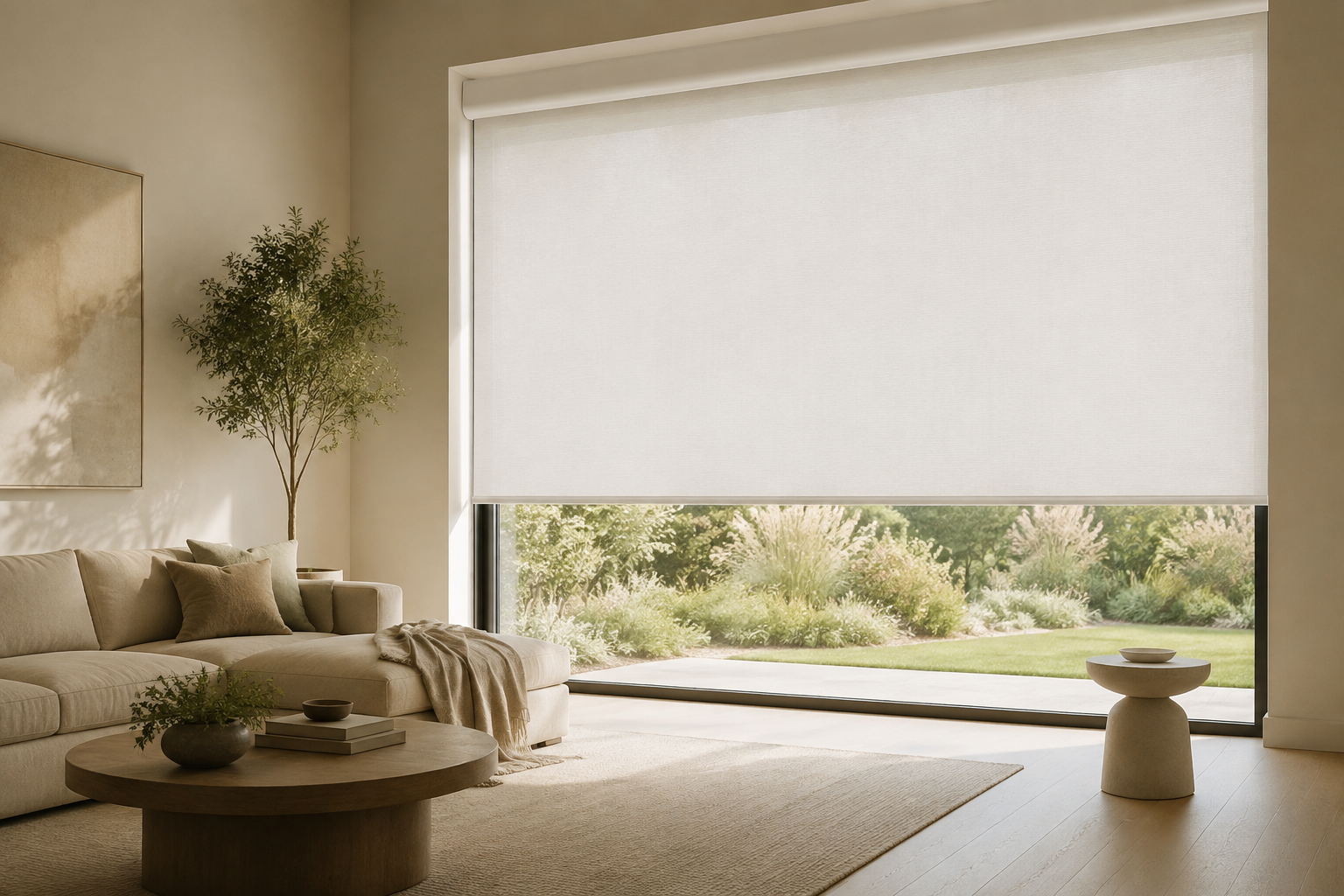
The Method
Five decisions, in this order
1. Light
Decide how much daylight you want on a sunny afternoon: keep it, soften it, or block it. This narrows fabric opacity before anything else.
2. Privacy
Check the window after dark, not at noon. Sheer fabrics that look private in daylight become see-through once your interior lights are on.
3. Insulation
If the room is cold in winter or overheats in summer, choose honeycomb cellular cells or a lined blackout fabric to slow heat transfer.
4. Operation
Consider height, reach, how often it moves, and whether children or pets are around. Cordless and motorized options remove hanging cords entirely.
5. Look
Only now pick colour, texture, and hardware finish — with samples in your own room light, not under showroom lighting.
What to choose, room by room
| Room | First choice | Why it works |
|---|---|---|
| Bedroom | Blackout with side channels | Seals edge light for real darkness and better sleep |
| Nursery | Cordless or motorized blackout | Darkness with no cords within reach |
| Living room | Zebra blinds or 3% sheer roller | Keeps the view and daylight, closes for evening privacy |
| Home office | Solar / sheer roller shade | Cuts screen glare without making the room dark |
| Kitchen | Faux wood venetian | Wipes clean, handles steam, tilts for daylight |
| Bathroom | Light-filtering roller or cellular | Privacy with soft daylight, moisture-tolerant |
| Patio door | Vertical blinds or motorized curtains | Slides aside so the door still works |
| Skylight / high window | Motorized cellular or roller | Reachable with a remote instead of a ladder |
Our most common recommendations for Vancouver homes and condos, based on thousands of installed windows.
Light & Privacy
How to read fabric openness numbers
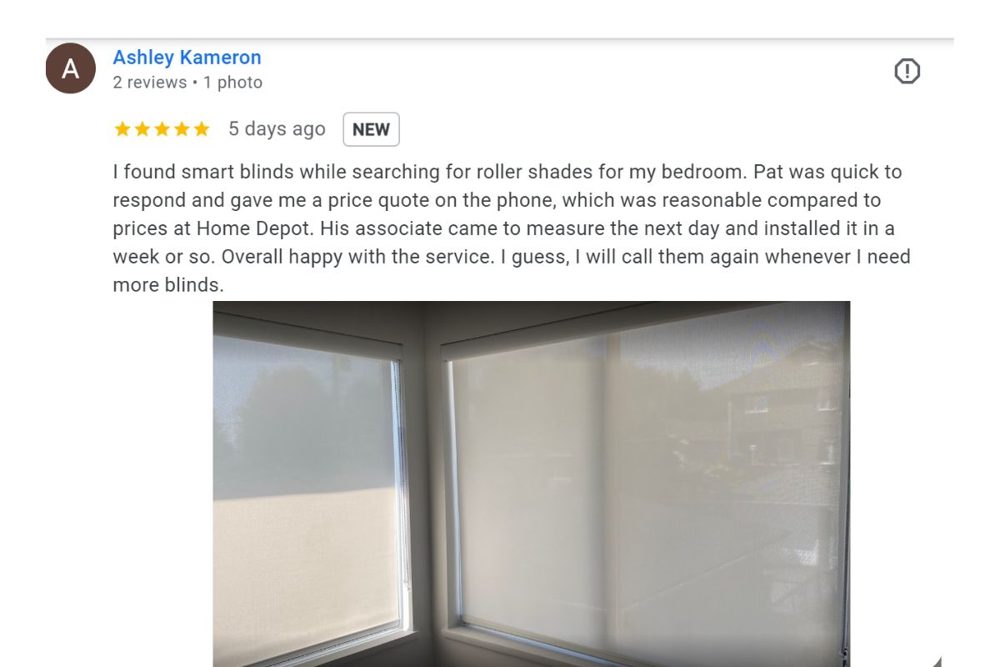
Roller and solar fabrics are rated by openness: 1%, 3%, 5%, and 10%. The lower the number, the tighter the weave and the more it blocks. A 1% fabric preserves a surprising amount of view while cutting most glare and UV; a 10% fabric feels airy but offers little privacy.
Light filtering means daylight comes through diffused and shapes are hidden. Dim-out cuts most light without full darkness. Blackout blocks the fabric completely — but only side channels stop the light leaking around the edges.
- View plus glare control: 1%–3% openness
- Daytime privacy with soft light: light filtering
- Sleep and media rooms: blackout plus side channels
Comfort & Cost
When insulation should drive the decision
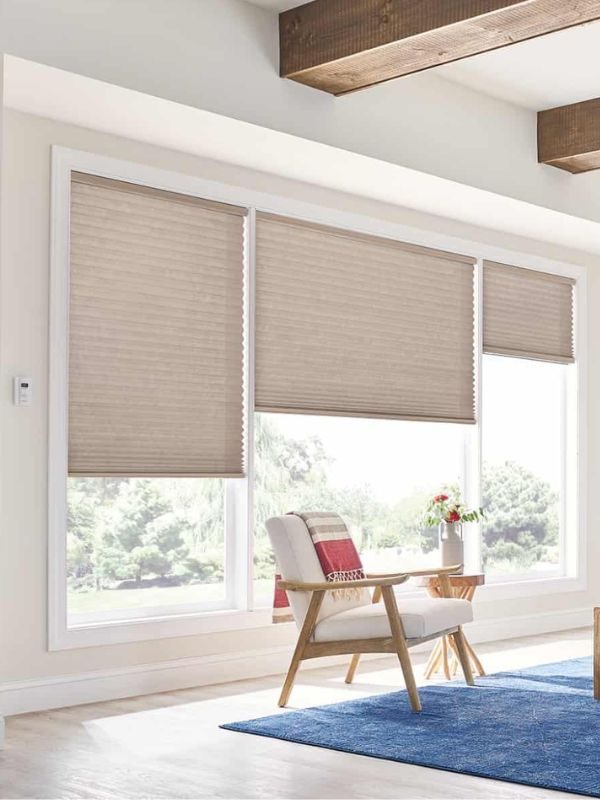
Windows are where most homes lose heat. If a room has large glass, single panes, or is above an unheated space, insulation should outrank looks — honeycomb cellular shades trap air in sealed cells and slow that loss.
The same cells help in reverse during a heat wave, especially on west-facing windows, and they dampen outside noise slightly, which matters on a busy street.
- Coldest rooms: double-cell cellular shades
- Overheating rooms: cellular or blackout on the sunny side
- Automate it: schedules open and close the shades daily
Operation
Cordless, wand, chain, or motor?
How a blind is operated decides whether you actually use it. Windows you adjust several times a day should be effortless; windows you rarely touch can be simpler and cheaper.
Anything high, wide, heavy, or behind furniture is a candidate for motorization. Anywhere children or pets play should be cordless or motorized.
- Cordless: lift by hand, nothing hanging — great for kids' rooms
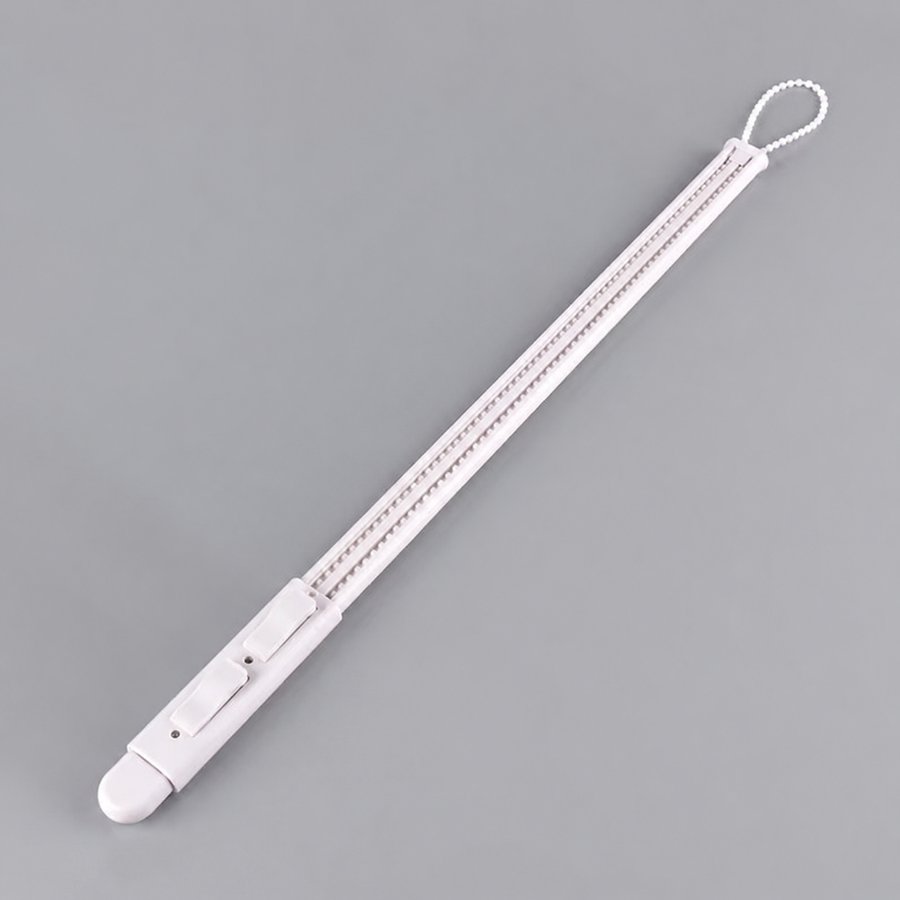
- Wand: push-pull control on verticals and some rollers
- Chain with shroud: lowest cost, tensioned to the wall
- Motor: remote, app, voice, and schedules for hard-to-reach glass
Common mistakes to avoid
- Judging privacy in daylight instead of after dark
- Choosing colour before deciding opacity
- Buying off-the-shelf sizes and living with light gaps
- Leaving corded blinds in a child's room
- Forgetting a plan for the one window you can't reach
Keep Comparing
More blind comparisons and guides
What are the best blinds?
Every blind type ranked by room, with installed price ranges.
How to choose window coverings
A step-by-step way to decide on light, privacy, insulation, and budget.
Roller shades vs zebra blinds
The two most popular choices in Vancouver, side by side.
Blackout vs cellular for bedrooms
Darkness, insulation, and noise compared.
Motorized vs manual blinds
What motorization actually costs and when it pays off.
Blinds installation service
How our free measure and professional installation works.
Related Services
Blinds services in Vancouver
Not sure which one is right for your windows?
Book a free in-home consultation. A designer brings fabric samples and motor demos to your home, measures every window, and leaves you with a written quote the same visit.