
Blackout vs Cellular Blinds
Both blackout blinds and cellular honeycomb shades are sold as the bedroom answer. One is built for darkness, the other for insulation — and there is a version that does both. Here is how they compare.
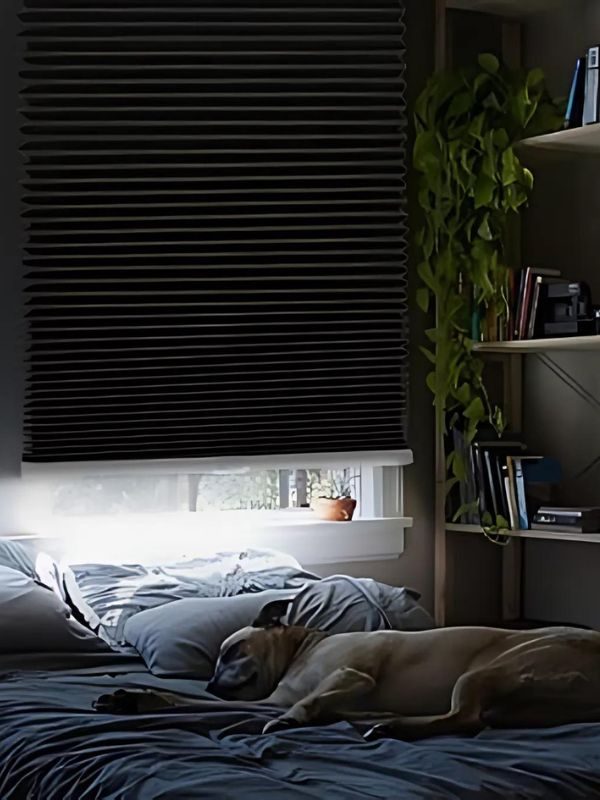
Blackout blinds vs cellular shades
| Blackout blinds | Cellular (honeycomb) shades | |
|---|---|---|
| Darkness | Best — near-total with side channels | Good with blackout fabric, less edge sealing |
| Insulation | Good | Best available — sealed air cells |
| Noise dampening | Slight | Noticeably better |
| Look | Flat fabric panel | Soft pleated honeycomb |
| Light gaps | Sealed by U or L channels | Small side gaps remain |
| Top-down / bottom-up | No | Yes |
| From (installed) | $249 with side channels | $229 light filtering / $279 blackout |
| Best for | Sleep, nurseries, media rooms | Cold or noisy rooms, energy savings |
Starting installed prices for a 36" × 48" window including free measurement and installation.
Choose Blackout If
Darkness is the whole point
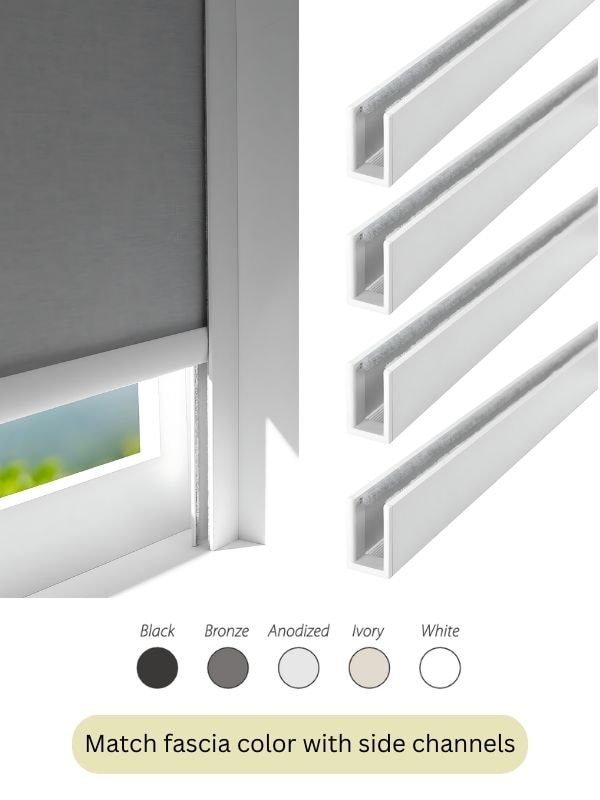
A blackout fabric blocks 100% of light through the material, but light still finds the edges. Adding U-channel or L-channel side seals plus a top cassette is what turns a dark-ish room into a properly dark one — the difference is obvious at 5 a.m. in June.
This is the setup we install for shift workers, nurseries, and media rooms where projector contrast matters.
- Side channels seal the edge light
- Cassette headbox stops light spill at the top
- Pairs well with motorization on a wake-up schedule
Choose Cellular If
The room is cold, hot, or noisy
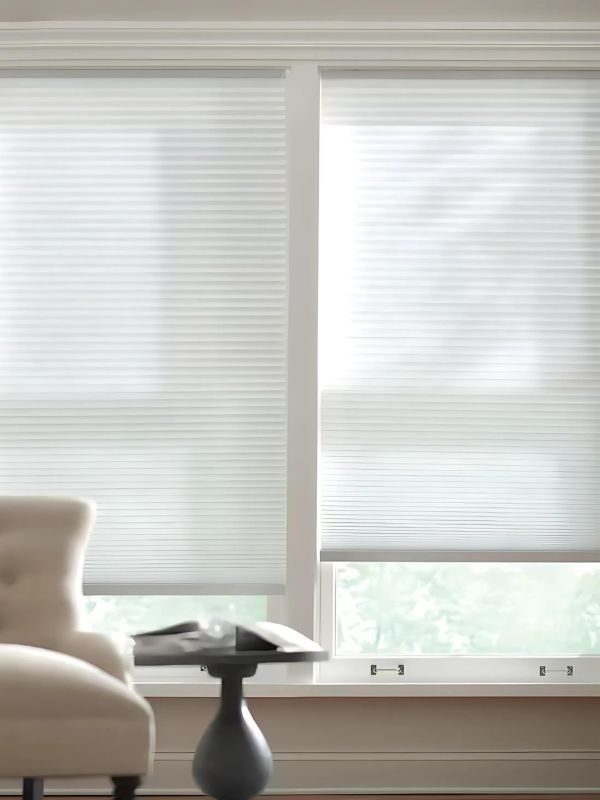
Cellular shades trap air inside honeycomb cells, which slows heat moving through the glass in both directions. In a bedroom over a garage, in a basement suite, or beside a single-pane window, that comfort difference is felt immediately.
Cellular fabrics come in light filtering and blackout. The blackout version gives you most of the darkness of a blackout roller plus the insulation, which is why it's our usual pick for a cold bedroom.
- Double-cell for the coldest rooms
- Blackout cellular for darkness plus insulation
- Top-down/bottom-up for daylight with privacy
Our recommendation
If your only complaint is light, choose a blackout roller with side channels — it is the darkest and most cost-effective option. If the room is also cold, drafty, or noisy, choose blackout cellular shades and accept slightly more edge light for a meaningfully more comfortable room.
For a west-facing bedroom that both overheats and gets early light, we often install blackout cellular with side channels and a motor on a schedule, so the shade closes before the afternoon sun hits.
Keep Comparing
More blind comparisons and guides
What are the best blinds?
Every blind type ranked by room, with installed price ranges.
How to choose window coverings
A step-by-step way to decide on light, privacy, insulation, and budget.
Roller shades vs zebra blinds
The two most popular choices in Vancouver, side by side.
Blackout vs cellular for bedrooms
Darkness, insulation, and noise compared.
Motorized vs manual blinds
What motorization actually costs and when it pays off.
Blinds installation service
How our free measure and professional installation works.
Related Services
Blinds services in Vancouver
Not sure which one is right for your windows?
Book a free in-home consultation. A designer brings fabric samples and motor demos to your home, measures every window, and leaves you with a written quote the same visit.