Window Coverings & Energy Efficiency: Real-World Study
A real-world study comparing window coverings for energy efficiency, showing which blinds cut heat loss and cooling costs the most.
Summary
Up to 30% of a building's heating load is lost through windows, making them one of the biggest causes of heat loss in winter. Many window coverings claim to improve insulation, but their real performance under normal conditions can differ greatly.
This study, carried out by Smart Blinds Shop, evaluates how well six different kinds of window coverings retain heat. Testing used a conventional double-pane glass window with normal installation gaps, in a realistic winter setting with outdoor temperatures ranging from 1°C to 4°C. We measured how long each covering kept the room warm after the heat was turned off, then calculated the resulting energy cost savings.
The highest insulation values were obtained by double-cell honeycomb blinds, followed by single-cell honeycomb. Every covering performed better than an unprotected window, which shows that any window treatment can help prevent heat loss and lower heating expenses.
1. Introduction
Purpose: to assess and compare the real-world insulation performance of six common window coverings in winter conditions.
Scope: the study focuses on household rooms maintained at 25°C, then allowed to cool to 20°C once heating is turned off. Outdoor temperatures ranged between 1°C and 4°C, representative of many temperate climates.
Background: although double-pane windows reduce heat transfer better than single-pane windows, they still permit significant heat loss in cold weather. Adding insulating window coverings is far less expensive than replacing every window — but the design, material, and sealing of these products vary greatly. By examining test results under consistent conditions, this study offers insights to help homeowners and building managers make well-informed, economical decisions.
2. Methodology
All tests were carried out in a 13 ft × 12 ft × 8 ft (1,248 ft³) room. The window was a double-pane glass unit measuring 5 ft × 4 ft (1.86 m²), heated by a 3,000 W electric baseboard heater (10,236 BTU/hr). Outdoor temperatures ranged from about 1°C to 4°C over two weeks in February.
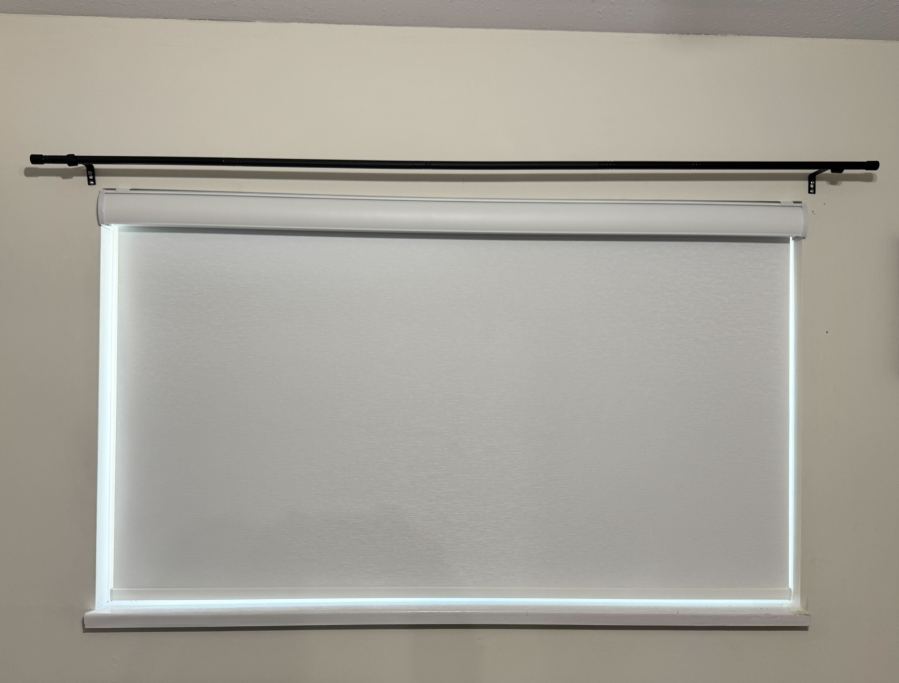
Each set of blinds had a 1 cm gap around the edges, reflecting imperfect real-world installations. The room was sealed — door closed and vents blocked — to avoid interference from adjacent spaces or drafts.
Test setup
2.2 Blinds tested and specifications
- Double-cell honeycomb — 19 mm air cells, polyester-coated.
- Single-cell honeycomb — 14 mm air cells, uncoated.
- Blackout roller shade — PVC backing, 0% openness.
- Light-filtering roller shade — 1% openness, fibreglass weave.
- PVC vertical blinds — 89 mm vanes, thin plastic.
- Faux wood venetian blinds — 50 mm slats, polymer composite.
- Baseline: uncovered double-pane window.
2.3 Testing protocol
- Preheating: the room was heated to 25°C and held there for 30 minutes before the heater was powered off.
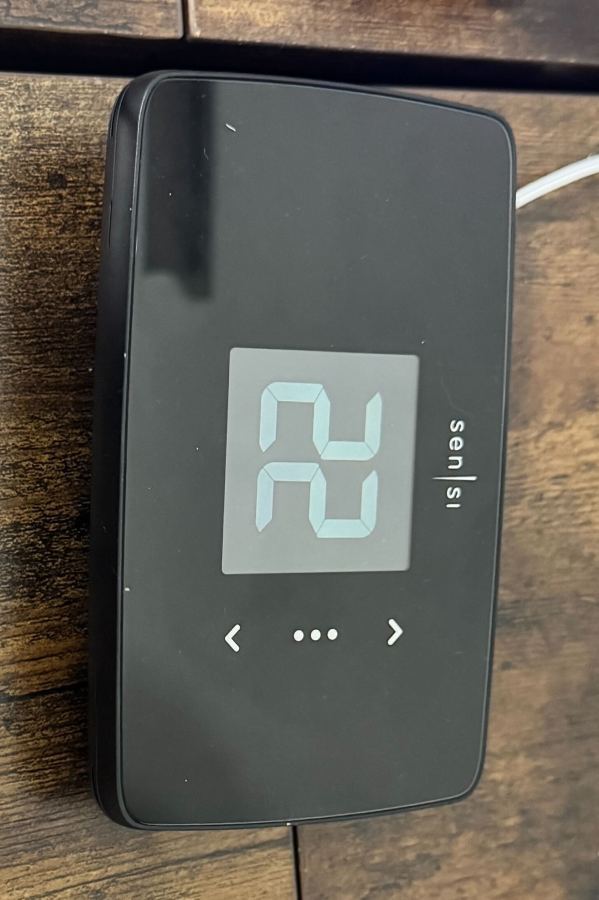
- Cooling: we measured the time for the room to cool from 25°C to 20°C using temperature sensors logging at 1-minute intervals, and recorded the rate of temperature drop in °C/hour.
- Control: the procedure was repeated with no blinds installed to gauge the difference each covering makes.
- Repetitions: each blind type was tested twice and the results averaged to minimise day-to-day weather variation.
2.4 Data analysis
- Heat retention: how much each blind type slowed the cooling process relative to the uncovered baseline window.
- Energy savings: modelled on a typical usage scenario — a 1000 W heater running 7 hours/day at $0.16/kWh for 6 months.
3.1 Heat retention performance
| Blind type | Time to cool (25°C–20°C) | Heat loss rate (°C/hr) | Efficiency vs. no blinds |
|---|---|---|---|
| Double-Cell Honeycomb | 3.7 hours | 1.35 °C/hr | 311% improvement |
| Single-Cell Honeycomb | 3.1 hours | 1.61 °C/hr | 244% |
| Blackout Roller Shade | 2.4 hours | 2.08 °C/hr | 167% |
| PVC Vertical Blinds | 1.9 hours | 2.63 °C/hr | 111% |
| Faux Wood Venetian | 1.7 hours | 2.94 °C/hr | 89% |
| Light-Filtering Roller Shade | 1.5 hours | 3.33 °C/hr | 67% |
| No Blinds (Baseline) | 0.9 hours | 5.56 °C/hr | 0% (baseline) |
Key takeaways
- Compared to a plain double-pane window, double-cell honeycomb kept the room warm more than three times longer.
- Single-cell honeycomb was also highly effective, demonstrating the importance of trapped air layers in the blind construction.
- Blackout roller shades greatly reduced heat loss versus no blinds, though side gaps limited total efficiency.
- Light-filtering roller, venetian, and vertical blinds offered only modest insulating advantages.
3.2 Calculated energy savings
We used a model where a 1000 W heater runs 7 hours/day at $0.16/kWh for a 30-day month: $33.60 per month per standard window, or $201.60 per window across a 6-month heating season.
Typical home (30 standard windows)
| Blind type | Savings % | Annual savings (vs. $6,048) |
|---|---|---|
| Double-Cell Honeycomb | 78.7% | $4,760 |
| Single-Cell Honeycomb | 71.6% | $4,327 |
| Blackout Roller Shade | 54.3% | $3,278 |
| Light-Filtering Roller | 33.3% | $2,012 |
| PVC Vertical Blinds | 11.1% | $670 |
| Faux Wood Venetian | 8.9% | $538 |
Total baseline: $6,048 per heating season (30 windows × $201.60).
Condo (10 large windows, each 2.5× standard size)
| Blind type | Savings % | Annual savings (vs. $5,040) |
|---|---|---|
| Double-Cell Honeycomb | 78.7% | $3,965 |
| Single-Cell Honeycomb | 71.6% | $3,610 |
| Blackout Roller Shade | 54.3% | $2,738 |
| Light-Filtering Roller | 33.3% | $1,678 |
| PVC Vertical Blinds | 11.1% | $559 |
| Faux Wood Venetian | 8.9% | $449 |
Total baseline: $5,040 per heating season.
4. Discussion
The significance of air pockets
Because honeycomb constructions include built-in air layers, they perform exceptionally well thermally. This design consistently outperforms thinner materials and slat-style blinds.
Gaps in installation
Large gaps around the edges reduce the effectiveness of even the strongest blinds. Careful installation or added side channels resolves this.
Performance versus cost
Double-cell honeycomb blinds may cost more up front, but the long-term reduction in heating expense can make them a wise investment.
Lifestyle factors
Buyers weigh privacy, light filtering, and aesthetics alongside energy efficiency. Blackout rollers suit bedrooms, but they block daylight completely when fully dropped.
5. Conclusion
Real-world research conducted over a two-week winter period demonstrated that double-cell honeycomb blinds are the most effective method for minimising heat loss through standard double-pane windows. Single-cell honeycomb designs showed significant improvements, and even the least insulating options outperformed having no covering at all. These findings emphasise the importance of selecting high-R-value window coverings and ensuring they are installed properly.
6. Recommendations
- Pick honeycomb: choose double- or single-cell honeycomb blinds for the best insulation.
- Focus on fit: measure carefully and keep edge gaps to a minimum. Where possible, seal with side channels or tapes.
- Consider automation: motorized blinds set to open and close at sunrise and sunset, or linked to temperature sensors, can greatly improve total efficiency.
- Mix your treatments: layering blinds with curtains helps keep heat in where both warmth and appearance matter.
- Look at regional rebates: in some areas, energy-saving upgrades such as insulating blinds may qualify for rebates or tax credits.
7. Additional observations and future work
- Summer performance: although this analysis focuses on winter heat loss, the same coverings also reduce summer heat gain, improving year-round comfort and lowering cooling costs.
- Advanced window options: for optimal results, especially in hot climates, combine energy-efficient coverings with dual-pane or triple-pane windows.
8. Appendix: detailed assumptions and calculations
Heat retention measurement: the 25°C to 20°C range was chosen to align with typical indoor comfort settings. The time required to drop 5°C once the heat source was turned off served as a straightforward indicator of heat retention. The baseline assumed a standard mid-grade double-pane glass window commonly found in 1990s-era homes; R-values for double-pane windows typically fall between R-2 and R-3 depending on coatings and gas fills.
Baseline energy cost assumptions: heater size 1000 W (1 kW), 7 hours/day of operation, $0.16 per kWh. Monthly consumption per window = 1 kW × 7 h/day × 30 days = 210 kWh/month, or 210 × $0.16 = $33.60/month per window. With a 6-month heating season, that is $33.60 × 6 = $201.60 per window per season.
Typical home and condo scenarios: a typical home with 30 standard windows gives an annual baseline of 30 × $201.60 = $6,048 per season. A condo with 10 large windows, each 2.5× the area of a standard window, costs $84.00 per large window per month, $504.00 per season, and $5,040 per season in total.
Savings percentages: these reflect how each blind type reduces heat transfer relative to the uncovered baseline window, combining measured cooling times with lab-derived R-values. Annual savings = baseline cost × savings %. For example, double-cell honeycomb at 78.7% in a 30-window home: $6,048 × 0.787 ≈ $4,760. The same logic applies to the condo scenario with its $5,040 baseline.
8.5 Limitations of calculations
- Outdoor temperature range (1°C to 4°C): results represent mild to moderate winter conditions, and savings may scale differently in areas with more severe cold.
- Assumed heating hours: we used a simplified model of 7 hours/day. Actual operation varies with thermostat settings, occupant behaviour, and local climate.
- Single-room simulation: results focus on heat loss through one window in one room. Real homes also lose heat through walls, infiltration around doors, and more complex heating systems such as furnaces and heat pumps.
Prepared by
Smart Blinds Shop (Luminex Smart Blinds Inc.) Research Group.
Disclaimer: the data and results in this study are provided for general guidance on energy-efficiency measures only. Smart Blinds Shop (Luminex Smart Blinds Inc.) is not liable for any damages resulting from the use or interpretation of this study's findings.
Need help choosing?
Book a free in-home consultation across Metro Vancouver and Kelowna. We bring fabric samples, measure every window, and quote on the spot.